

Model Context Protocol (MCP): The Future of Enterprise AI Integration
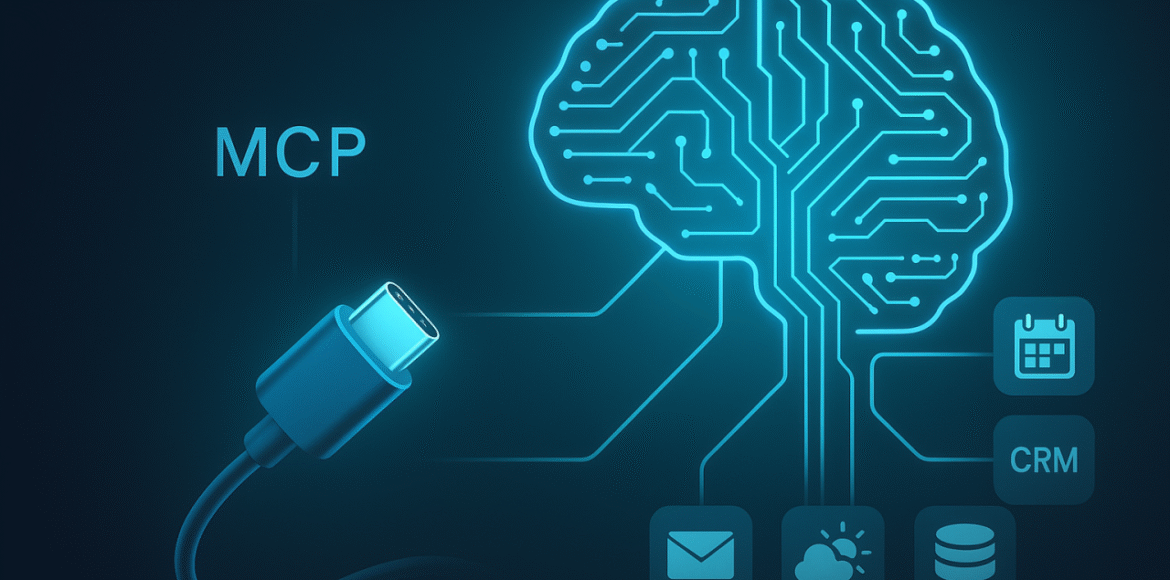
The Model Context Protocol (MCP) represents a significant advancement in how organizations can effectively leverage AI systems within their enterprise environments. As AI consulting professionals helping businesses navigate this rapidly evolving landscape, we believe MCP offers transformative potential for organizations seeking to maximize their AI investments.
What is Model Context Protocol?
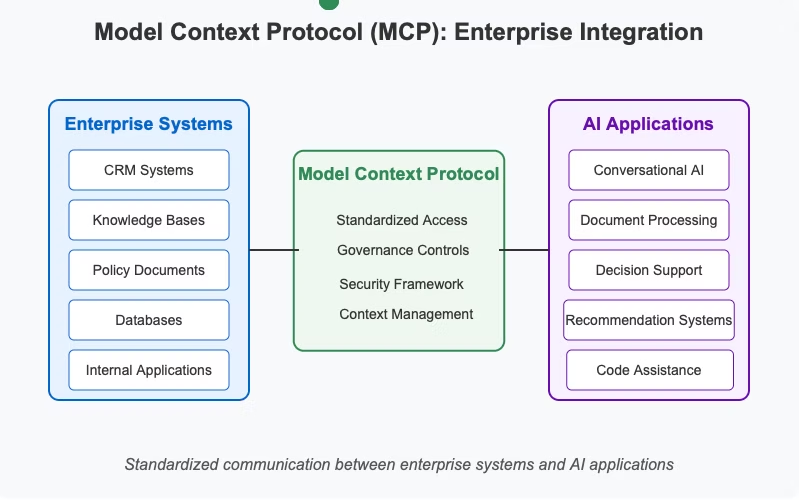
Model Context Protocol is an emerging framework designed to standardize and enhance the interaction between AI models and the contextual information they require to generate relevant, accurate responses. At its core, MCP addresses one of the fundamental challenges in enterprise AI adoption: ensuring AI systems have the right information at the right time to deliver valuable outputs.
Think of MCP as creating a standardized language through which AI models can request, receive, and process information from various enterprise systems. Rather than building custom integrations for each AI model and data source, MCP establishes a protocol that allows for more seamless communication between these components.
Why Enterprise Leaders Should Care About MCP
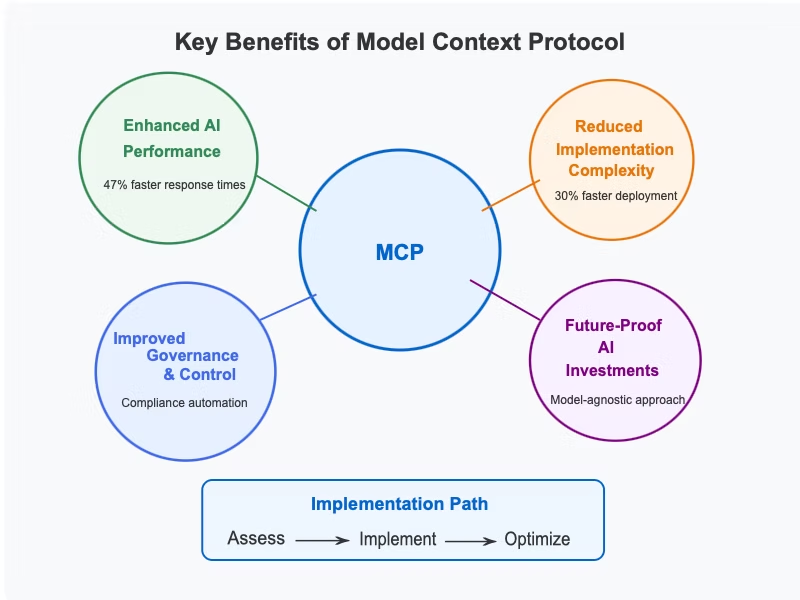
For executives and decision-makers evaluating AI investments, MCP offers several compelling advantages:
- Enhanced AI Performance
MCP enables AI systems to access precisely the information they need from enterprise knowledge bases, databases, and applications. This contextual awareness dramatically improves response quality and relevance. Instead of generating answers based solely on general training data, AI systems can incorporate your organization’s specific information, policies, and expertise.
- Reduced Implementation Complexity
Without a standardized protocol, integrating AI with enterprise systems typically requires extensive custom development work. MCP simplifies this process by providing a consistent framework for these interactions, reducing both implementation time and costs.
- Improved Governance and Control
MCP allows organizations to maintain tighter control over what information AI systems can access. This is crucial for compliance with regulations and internal policies, particularly in highly regulated industries where data privacy and security are paramount concerns.
- Future-Proofing AI Investments
As AI technology continues to evolve rapidly, organizations need approaches that can adapt to new models and capabilities. MCP creates an abstraction layer between your enterprise systems and the AI models themselves, making it easier to upgrade or switch models without rebuilding integrations.
Kathryn Murphy
MCP in Practice: Real-World Applications
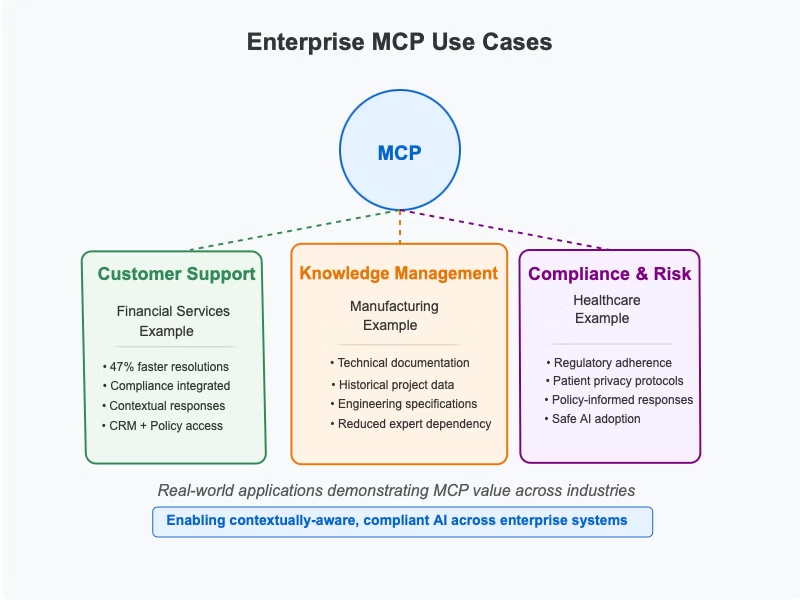
To illustrate the practical value of MCP, consider these enterprise use cases:
Customer Support Transformation
A financial services company implemented MCP to connect their AI assistant with their product documentation, compliance guidelines, and customer relationship management system. When customers ask questions, the AI can now seamlessly retrieve relevant policies, account information, and previous interactions. This has reduced resolution times by 47% while ensuring all responses comply with financial regulations.
Knowledge Management and Retrieval
A global manufacturing firm with decades of accumulated expertise in specialized processes used MCP to make this knowledge accessible to their workforce. Engineers can now query AI systems that access technical documentation, historical project data, and engineering specifications through the MCP framework. This has accelerated problem-solving and reduced dependency on scarce senior experts.
Enhanced Compliance and Risk Management
A healthcare organization implemented MCP to ensure their AI systems operate within strict regulatory guidelines. The protocol ensures that AI responses are always informed by the latest compliance requirements, internal policies, and patient privacy regulations. This has enabled safe AI adoption in sensitive healthcare contexts.
Implementing MCP: Key Considerations for Enterprise Leaders
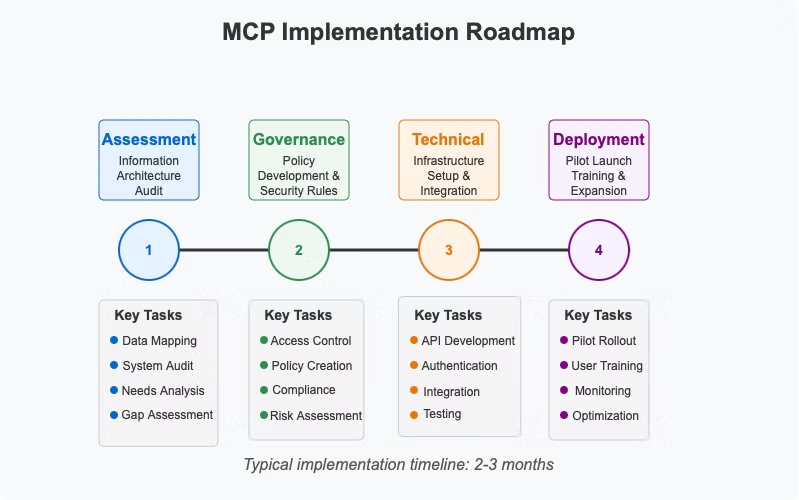
Successfully implementing MCP requires thoughtful planning and strategic decision-making:
- Information Architecture Assessment
Begin by evaluating your organization’s current information landscape. Where does critical knowledge reside? What systems contain the contextual information your AI systems will need? Understanding this architecture is essential for effective MCP implementation.
- Governance Framework Development
Establish clear policies regarding what information different AI applications can access through MCP. This includes considerations around sensitive data, compliance requirements, and information security.
- Technical Infrastructure Evaluation
Assess whether your current systems can support MCP implementation or if upgrades are needed. This includes evaluating API capabilities, data retrieval mechanisms, and integration points.
- Change Management Strategy
As with any significant technological shift, successful MCP implementation requires attention to organizational change management. This includes training for both technical teams and end users, clear communication about capabilities and limitations, and ongoing support.
The Future of MCP in Enterprise AI
As MCP continues to evolve, we anticipate several developments that will further enhance its value for enterprises:
- Expanded Standardization
Industry-wide adoption of MCP standards will facilitate easier integration across platforms and vendors, reducing the technical debt associated with AI implementations.
- Enhanced Security Frameworks
Future iterations of MCP will likely incorporate more sophisticated security models, enabling granular control over information access while maintaining performance.
- Dynamic Context Optimization
Advanced implementations will intelligently determine what contextual information is most relevant for each interaction, improving both performance and efficiency.
Conclusion: Positioning Your Organization for Success
For enterprise leaders navigating the complex AI landscape, Model Context Protocol represents a strategic opportunity to enhance the value and impact of AI investments. Organizations that implement MCP effectively will gain significant advantages in terms of AI performance, integration efficiency, and governance capabilities.
As AI consulting professionals specializing in enterprise implementation, we’ve witnessed firsthand how MCP can transform organizations’ approach to AI integration. By establishing this standardized framework for context management, companies can accelerate their AI initiatives while maintaining the control and specificity essential in enterprise environments.
The time to consider your MCP strategy is now. As this protocol gains momentum across industries, early adopters will establish competitive advantages through more effective, contextually aware AI systems that deliver measurable business value.