

The 2026 Playbook for Australian IT Leaders
Driving Enterprise Value with Automation, AI, and Cloud
If there’s one thing Australian IT leaders agree on heading into 2026, it’s that the landscape feels very different from the hype-driven cycle we saw in recent years. The conversations in boardrooms have become sharper. Instead of wide-eyed interest in automation and AI, executives are asking tougher, more practical questions. They want clarity. They want outcomes. And they want technology decisions that stand up to financial and operational scrutiny.
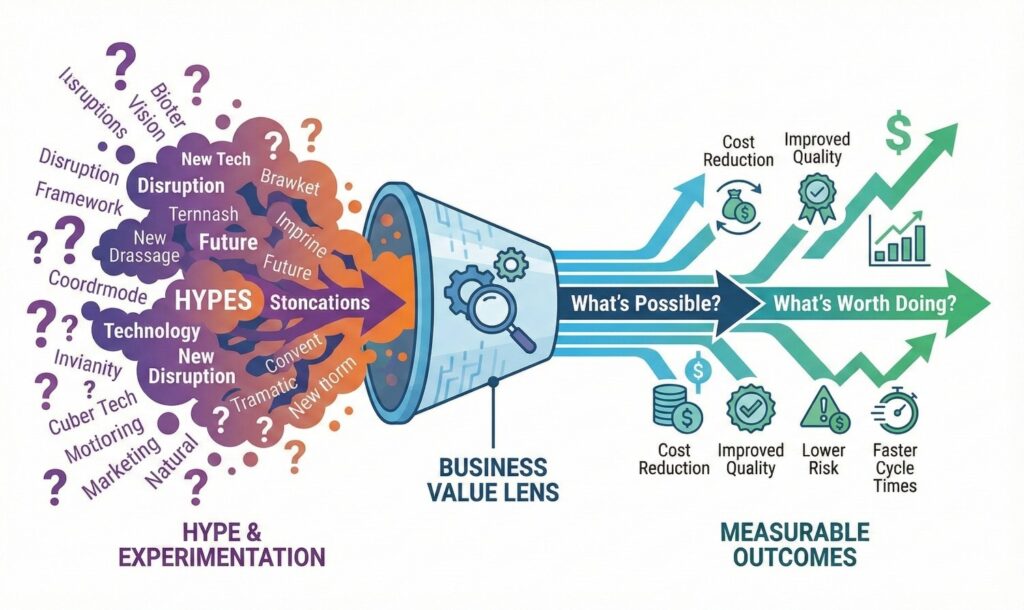
The mood has shifted from “What’s possible?” to “What’s worth doing?”
And that shift is healthy.
Across Sydney, Melbourne and the major enterprise hubs, the organisations building real momentum aren’t the ones chasing everything new. They’re the ones stepping back, reassessing the fundamentals, and tightening the connection between technology investments and business performance. For them, automation, AI and cloud are no longer categories — they’re levers for competitiveness. But only when used with intent.
2026 is shaping up to be the year where discipline, not experimentation, separates leaders from the rest.
A new standard for value — no more technology for technology’s sake
Many enterprises now carry years of cloud investment, modernisation programs, and scattered automation efforts. A lot of work has been done. Yet the impact often feels uneven. What distinguishes the stronger performers is the way they define value: not in features delivered or tools deployed, but in measurable improvements to the way the organisation actually runs.
Cycle times, quality indicators, operational risk, cost-to-serve, customer friction points — these are the metrics shaping the 2026 agenda. IT leaders who anchor their programs around the economics of the business will set the pace. Those who don’t will find themselves justifying projects that look impressive on paper but change very little in practice.
This is the year when the “why” behind technology decisions matters more than the “what.”
Cloud needs attention- elasticity, intelligence, and cost stability matter now
Most Australian enterprises are long past the migration phase. The question now is whether the cloud environments they’ve built are delivering the agility and predictability they were promised.
Leaders are pushing their teams to make the Cloud a more responsive, intelligent system than a collection of hosted workloads. That means using elasticity deliberately, automating scale decisions, connecting cloud events to business triggers, and tightening the feedback loop between consumption and cost. It also means strengthening governance to ensure spending grows in line with genuine demand rather than unmonitored sprawl.
Cloud strategy in 2026 is less about footprint and more about financial and operational precision.
Kathryn Murphy
AI is moving out of specialist teams and into the broader organization
What’s most notable for heading into 2026 is not the growth of AI adoption, but the shift in who is using it.
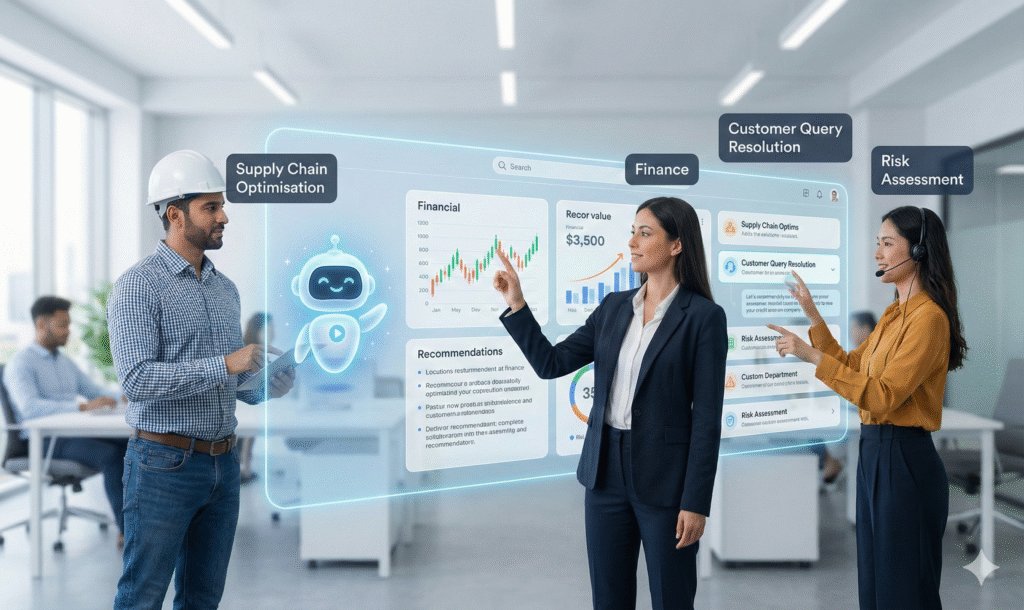
AI is no longer the domain of data scientists or innovation teams. It is becoming embedded in the tools, workflows and decisions of frontline functions — underwriting, supply chain, maintenance, case handling, customer operations, financial processing. Instead of “AI projects,” enterprises are investing in AI capabilities that ordinary business users interact with every day.
This shift has forced IT leaders to rethink how AI is introduced, governed, and maintained. They are building education pathways, refining responsible-AI frameworks, and emphasizing transparency in how AI makes decisions. Just as importantly, they are designing systems that allow employees to challenge, override, or escalate AI recommendations when required.
In 2026, AI that cannot be understood or trusted by those who rely on it simply does not get deployed.
Automation is evolving from “initiative” to organizational muscle
The era of scattershot automation efforts is ending. The enterprises succeeding in 2026 treat automation not as a series of isolated tasks but as a capability that reshapes how teams operate.
This requires a different ownership model. Business units need to be involved early — not as recipients, but as co-creators. IT sets direction, ensures consistency, safeguards platforms and integrations, and manages scale. But the real breakthroughs come when frontline teams start identifying bottlenecks, proposing redesigns, and actively shaping the workflows they rely on.
Automation works best when the people closest to the work help define what “better” looks like.
Security and trust aren’t support functions – they’re strategic
The expansion of AI and cloud services has pushed security into a new role. In 2026, security teams aren’t simply defending the perimeter. They’re shaping how the enterprise moves.
Strong identity foundations, auditable data flows, embedded monitoring, and consistent controls have become essential to delivering anything at speed. Regulatory expectations are rising, and organizations can’t afford to treat oversight as an afterthought. Leaders are prioritizing transparency around how data is used and how systems make decisions. Trust is now a competitive differentiator.
The organizations that move fast and stay safe are the ones that have made security part of the design, not part of the recovery.
The 2026 workforce model demands multidisciplinary collaboration
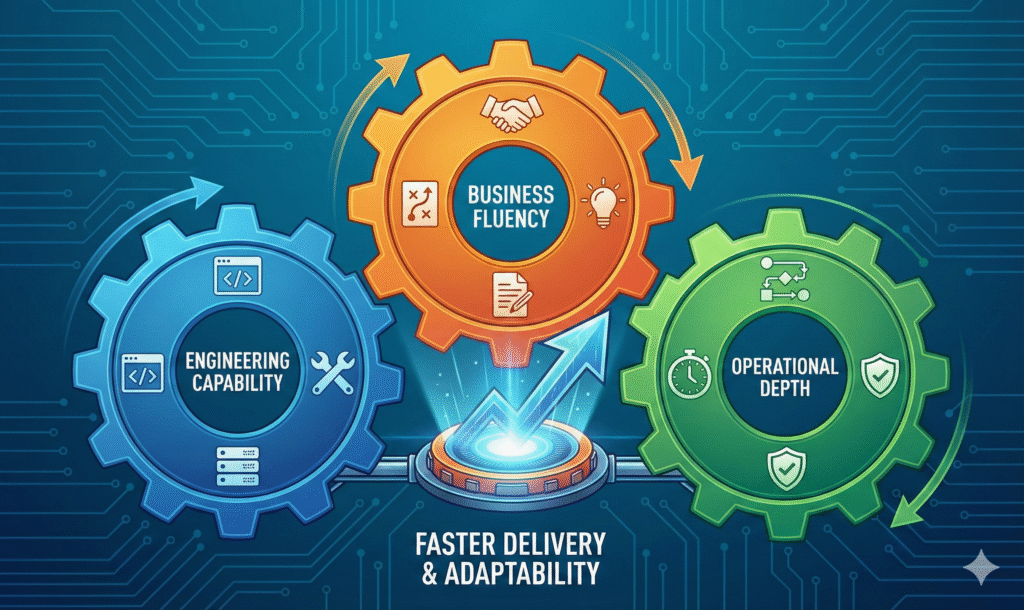
Australian enterprises are rethinking how they build and organize technology teams. Success with automation, AI and cloud now hinges on groups that combine engineering capability, business fluency and operational depth.
Instead of siloed roles, we’re seeing a rise in multidisciplinary teams: platform engineers working alongside automation analysts, AI specialists embedded with operations leaders, and product owners who can translate business ambition into technical execution. This shift has accelerated delivery velocity while reducing reliance on narrow expertise that cannot scale.
The goal is no longer to hire the rarest skills — it’s to assemble teams that can understand the system end-to-end.
A clear pattern is emerging – technology leaders win by operating with intent, not intensity
Across Australia, the enterprises poised for success in 2026 are not the ones pursuing the most aggressive pipelines or the flashiest AI demos. They are the ones leading with clarity: clarity of purpose, clarity of architecture, clarity of accountability, clarity of value.
Their technology strategy is not driven by the volume of initiative but by the precision of the outcomes they aim to produce. They focus on decisions that strengthen the enterprise, not distract it. They treat automation, AI and cloud not as novelty but as the engines that will define their organization’s competitiveness over the next decade.
And while their progress may appear measured on the surface, the foundation they are laying is anything but modest. It is the groundwork for a future operating model that is faster, more adaptive, and fundamentally more intelligent.
2026 will belong to the Australian enterprises that make these choices deliberately — and execute them consistently.
Be a part of the AI movement with Techno Union. Book a free Consultation Call to become the AI leaders in 2026 with Techno Union.